
The Infosys Science Foundation announced the winners of the Infosys Prize 2026 across six categories: economics, engineering and computer science, humanities and social sciences, life sciences, mathematical sciences, and physical sciences. The prize now focuses on researchers under 40, recognising early exceptional talent with a gold medal, citation, and USD 100,000.

Nandan Nilekani, head of the task force on exam reforms, stated on Tuesday that technology and a systematic approach can solve the issue of question paper leaks. He suggested generating exam papers from a large question bank at the last minute to remove economic incentives for leaks and also proposed moving towards computer-based testing.
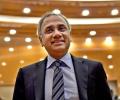
Infosys CEO Salil Parekh stated on Tuesday that the company's AI services, currently contributing over 8% of revenue, are growing rapidly and could account for almost half of its work within two to three years. He highlighted the strong demand for AI services, the company's hiring and training efforts for graduates in AI, and discussed potential risks like infrastructure challenges and societal backlash.

A global Microsoft outage significantly disrupted Indian businesses, affecting widely used applications like Outlook and Teams, leading to adjusted meetings, recalibrated plans, and concerns over corporate dependence on a few technology providers.

Infosys co-founder S Gopalakrishnan states that software engineers must now be retrained to review and certify AI-written code, as AI has automated coding. He emphasises that AI-generated code cannot be fully trusted and requires human oversight. Gopalakrishnan also highlights that IT services and outsourcing will continue, and AI presents significant opportunities for new products and services, particularly for India and startups.

Infosys has confirmed that Lax Gopisetty, chief of its subsidiary Infosys Public Services, is unreachable following devastating floods in Nepal. Gopisetty was visiting the region personally, and Infosys is working with agencies and his family to ensure his safety. The Ministry of External Affairs also reported hundreds of Indians missing or stranded due to the floods, with India offering assistance to Nepal.
Infosys Senior Vice President Vikram Meghal stated that India is experiencing a significant demand window in the semiconductor market and must evolve from merely engineering products to inventing complete systems. He highlighted the massive shifts driven by AI and supply chain challenges, urging a focus on "Invent in India" to capture higher value and leverage decades of investment in the ecosystem.

Experts cautioned that this headcount increase does not necessarily indicate a return of steady demand, which has evaded them over the last few years.

Indian benchmark equity indices, Sensex and Nifty, experienced a decline in early trade, primarily due to a sell-off in IT stocks and growing concerns over potential interest rate hikes by the US Federal Reserve. Track, Sensex, Nifty on November 19, 2026.

Indian stock markets witnessed a strong rebound, with the Sensex climbing nearly 1,000 points to 83,021.75 and the Nifty settling above 25,500 for the first time in nine months, driven by a rally in auto, bank, and FMCG stocks, sustained foreign fund inflows, and easing commodity prices.
Infosys co-founder Nandan Nilekani has dismissed fears that artificial intelligence will lead to job losses in India's IT services sector, calling such concerns "hogwash" and "disaster marketing." Speaking at the Bloomberg New Economy Forum 2026, Nilekani argued that AI will actually increase demand for IT firms as it necessitates complex business transformations and creates new types of jobs, particularly in small businesses.

Infosys, India's second-largest IT services firm, has appointed company veteran Ashiss Kumar Dash as CEO designate, with the leadership transition scheduled for April 1, 2027, after current CEO Salil Parekh completes his second term.

Indian equity benchmark indices Sensex and Nifty rallied for the second consecutive session, driven by strong buying in IT firms and a significant boost from Tata Group's retail arm Trent following its impressive September quarter earnings.

Indian benchmark indices, Sensex and Nifty, experienced declines in early trade due to persistently high crude oil prices and significant selling pressure in IT stocks, with global factors like US bond yields and upcoming Federal Reserve decisions also contributing to cautious investor sentiment. Track Sensex, Nifty on October 27.

Prime Minister Narendra Modi has announced the formation of a high-powered task force, led by Infosys co-founder Nandan Nilekani, to recommend reforms for examinations conducted by the National Testing Agency (NTA). The task force aims to leverage technology for a robust and transparent examination system, following recent public agitation and the resignation of the Education Minister.
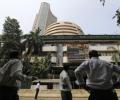
Analysts predict that the US midterm election results, which saw Democrats gain control of Congress, will primarily influence Indian markets through changes in global financial conditions, trade policy expectations, and geopolitical developments, with a keen focus on the US administration's actions in West Asia and their potential impact on crude oil prices.

India is proposing the Data Empowerment and Protection Architecture (DEPA) for AI Training, a national framework designed to enable startups, researchers, and companies to train AI models using data from hospitals, banks, and public agencies while ensuring privacy and security. This initiative aims to unlock significant AI-driven value for India's GDP by 2030.

Indian IT stocks have experienced their most significant weekly surge in 18 years, with the Nifty IT index climbing 11.72 per cent, as a global sell-off in AI-linked equities redirected investor attention towards India's IT services sector. This shift aligns with a JP Morgan report identifying India as a 'natural AI hedge' due to its large, liquid market and strong domestic institutional investor base.

Investors are set to monitor quarterly earnings, crude oil prices, the Jio Platforms initial public offering, and foreign investor activity in the upcoming holiday-shortened week, according to market analysts.
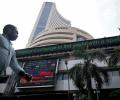
Indian equity benchmarks, the Sensex and Nifty, opened higher on Friday, driven by a strong rally in IT stocks, despite a significant overnight decline in US technology shares and broader Asian markets. Experts anticipate further market support from falling US bond yields, a strengthening rupee, and a substantial liquidity inflow following the Jio Platforms IPO allotment. Track

Indian equity benchmarks Sensex and Nifty extended their losses for a third consecutive session, with the Sensex declining 460.30 points and the Nifty dropping 123.70 points, primarily due to surging crude oil prices driven by escalating tensions in West Asia and weak global cues.
Indian equity benchmarks Sensex and Nifty experienced a decline in early trade, primarily due to a sell-off in power and metal stocks, mirroring a broader downturn across Asian markets. Elevated crude oil prices and firm US bond yields further dampened investor sentiment, while an expert warned of an impending correction in overvalued mid and small-cap segments. Track Sensex, Nifty on October 22.

Indian stock markets witnessed a significant rebound, with the Sensex rallying 1,109 points and the Nifty closing above 22,720, driven by strong performances in IT and financial sectors, a recovering rupee, and Finance Minister Nirmala Sitharaman's comments on long-term capital gains (LTCG) tax.
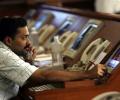
Indian benchmark stock indices, Sensex and Nifty, closed lower due to profit-taking, a spike in wholesale price-based inflation, and firm crude oil prices, despite some support from easing intraday crude oil prices and rupee appreciation.

'This creates a lot of uncertainty. I am not sure if I want to be here, but then a lot of this now depends on my company.'

Indian equity benchmark indices extended losses for a second consecutive session, with the Sensex dropping 143 points, driven by a sell-off in power, banking, and financial stocks, coupled with elevated crude oil prices and persistent FII selling.

Tata Consultancy Services (TCS) has stated that the recent suspension of eight IT firms, including itself, from a US green card programme will not impact its workforce strategy or customer engagements, citing its low number of applications and focus on local hiring.

'Indian IT firms must hire and train more Americans while reducing dependence on sending employees from India to the US.'

India has strongly criticised the US decision to suspend the Permanent Labor Certification (PERM) program for eight major IT firms, including Indian giants like TCS and Wipro. New Delhi also condemned US Vice President JD Vance's description of foreign professionals as "indentured servants," calling it "unwarranted and deeply offensive." The move is expected to impact thousands of Indian tech professionals seeking permanent residency in the US and further strains bilateral ties.

'...but could demotivate employees seeking US residency.'
HCLTech, India's third-largest IT services company, reported robust Q2 revenue growth of 2.3 per cent in constant currency, driven by services and ER&D segments, with strong new deal wins of $3.3 billion and significant traction in its AI business. Despite exceeding margin estimates and raising revenue guidance, some brokerages remain cautious due to the stock's premium valuation compared to peers.

India's leading IT companies are anticipated to report subdued revenue growth and largely stable margins for the July-September quarter, as clients maintain tight discretionary budgets, with analysts closely watching the conversion of strong bookings into revenue and the impact of AI on traditional services.

Indian information technology (IT) stocks, led by Infosys, experienced a significant selloff, dragging the Nifty to a two-month low, primarily due to escalating West Asian tensions pushing crude oil prices higher, and concerns over upcoming large IPOs diverting funds from secondary markets. The sector is also grappling with the long-term implications of AI disruption.
Indian benchmark indices, Sensex and Nifty, experienced a significant downturn, with Sensex tanking 778 points and Nifty closing at a five-month low, driven by surging crude oil prices, geopolitical tensions, and fears of further interest rate hikes by major central banks.

IT services stocks have had tough two years, with prices coming under pressure from 2025 and the sell-off extending through the first half of 2026.

Indian benchmark indices Sensex and Nifty saw a rebound in early trade, driven by a moderation in crude oil prices, despite persistent selling by Foreign Institutional Investors (FIIs) and mixed global market cues.
Infosys has been recognised as the leading company for career growth in India, according to LinkedIn's '2026 Top Companies' list. The list, dominated by tech firms, consulting giants, and financial institutions, also features Accenture, Amazon, JPMorgan Chase, and SAP in the top five.

Surging growth in sales by companies hasn't translated into higher salaries just yet.

Infosys shares experienced a significant drop, hitting a 52-week low, after the company announced its Q4FY26 results and provided a modest revenue growth guidance of 1.5-3.5 per cent in constant currency for FY27, falling below market expectations and raising concerns about AI-led deflation and margin pressures.

The National Testing Agency (NTA) has moved to a new office and deployed CISF security to safeguard confidential areas, following a major controversy over the NEET paper leak and administrative lapses. This move aims to implement foolproof security arrangements and restore public trust in the examination system.
